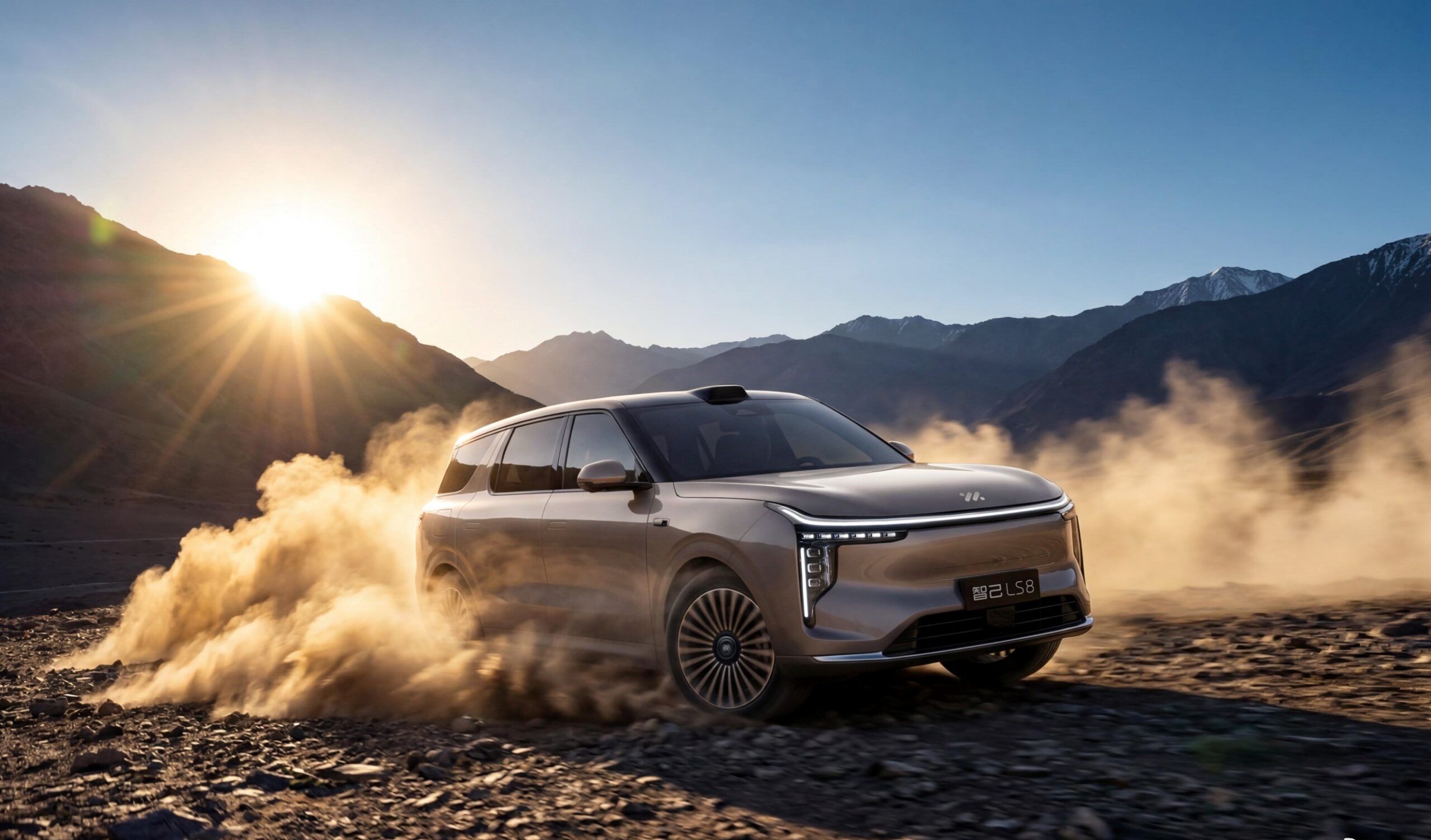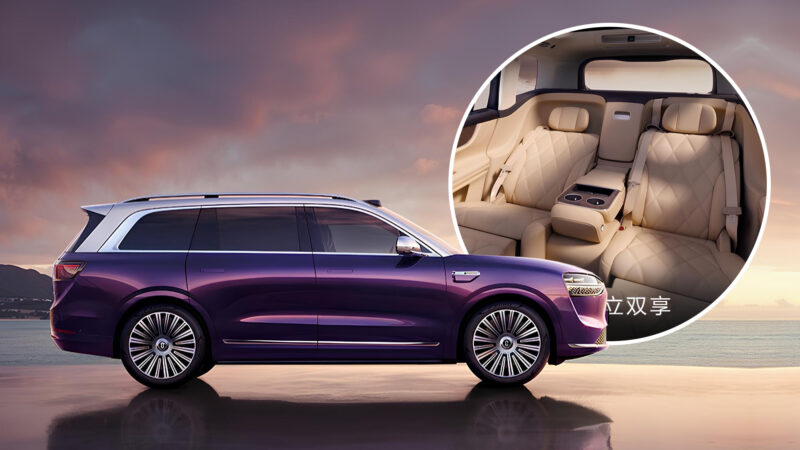

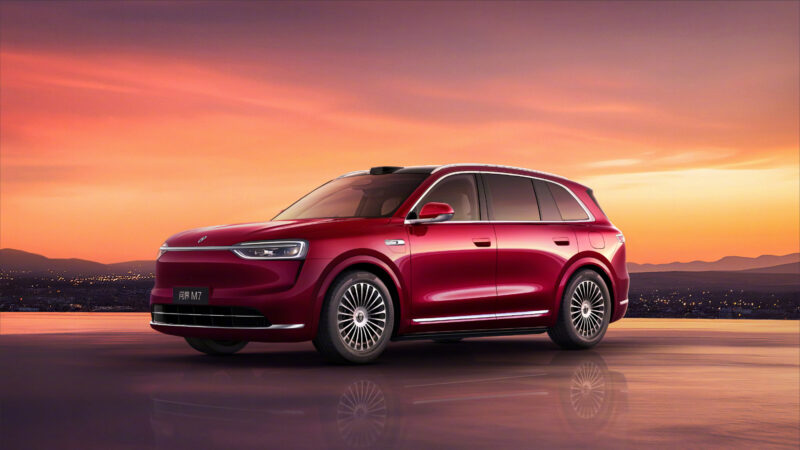
Huawei and Seres just pulled the wraps off the all-new Aito M7, a large EREV crossover aimed at reigniting the model’s once-hot sales streak in China. With a fresh design borrowed from its M8 sibling and a suite of familiar tech, the partners are betting this refresh can win back customers in a fiercely competitive market. The new M7 is slated to hit the Chinese market in September 2025 and may eventually head overseas under the Seres brand.
The M7’s Rollercoaster Journey
The Aito M7 has had a wild ride. Launched in 2022 as a range-extended EV built on the bones of a gasoline-powered SUV, it initially carried a hefty price tag of 319,800 yuan (about $44,700). Sales were lukewarm until late 2023 when Huawei and Seres made a game-changing move: they slashed the price to 258,000 yuan ($36,060).
The price cut worked wonders, turning the M7 into an overnight sensation and racking up 193,342 sales last year. However, the momentum didn’t last. In the first half of 2025, sales plummeted by a staggering 71%, a tough pill to swallow in China’s EV sales race. This new model isn’t just an update; it’s a strategic reboot designed to put the M7 back on shopping lists.
A Fresh Look with Familiar Bones
The new M7 adopts the “Interstellar Matrix” design language first seen on the Aito M8. This translates to a cleaner, more modern aesthetic with a closed-off front grille, distinctive gauntlet-shaped headlights, and a trapezoidal lower air intake. The body is smoothed out with flush door handles and features a sleek, single-unit taillight that stretches across the rear.
Blackened pillars create a “floating roof” effect, and practical roof rails are included. A new “Coral Red” paint option adds a splash of color to the lineup. While official dimensions haven’t been released, they’re expected to stay close to the original’s 5020 mm length, 1945 mm width, and 1760 mm height.
| Metric | Value | Unit | Notes |
|---|---|---|---|
| Peak power (RWD) | 227 | kW | Equivalent to 304 hp |
| Peak power (AWD) | 392 | kW | Equivalent to 526 hp |
| Battery capacity | 37 – 53.4 | kWh | Depends on trim |
| Range extender | 1.5-liter Turbo | Engine | 118 kW (158 hp) generator |
| Dimensions (L/W/H) | 5020/1945/1760 | mm | Expected to be similar to predecessor |
| Starting price (local market) | ¥249,800 – ¥329,800 | CNY | Estimated range ($34,920 – $46,100) |
Under the Hood: EREV Power and Huawei’s Brain
The new M7 will likely use a similar EREV powertrain to the M8. This setup uses a 1.5-liter turbocharged engine (158 hp) not to drive the wheels, but to act as a generator for the battery. This gives you the smooth, instant torque of an EV without the range anxiety. An entry-level RWD version will offer a respectable 304 hp, while the top-tier 4WD variant will deliver a potent 526 hp. Battery options will range from 37 kWh to 53.4 kWh.
A key upgrade is the roof-mounted LiDAR sensor, signaling the inclusion of Huawei’s advanced ADS 4.0 system. This driver-assistance suite is one of the most capable on the market, offering features like all-speed collision avoidance and confident navigation through tricky intersections. It’s another example of a Huawei-powered vehicle leaning heavily on the tech giant’s expertise.
What to Expect
When the refreshed Aito M7 launches in September, its pricing will likely stick close to the current model’s range of 249,800 to 329,800 yuan ($34,920 to $46,100). This positions it as a compelling option for families looking for a large, tech-forward SUV without a premium price tag.
For Huawei and Seres, this launch is critical. They need to prove the Aito brand can build sustainable demand beyond aggressive price cuts, especially as competitors like Changan and Geely continue to saturate the market. If successful, the new M7 could also find its way to international markets as the Seres 7, giving a global audience a taste of Huawei’s automotive ambitions. It’s a calculated move, and one the whole industry will be watching closely.