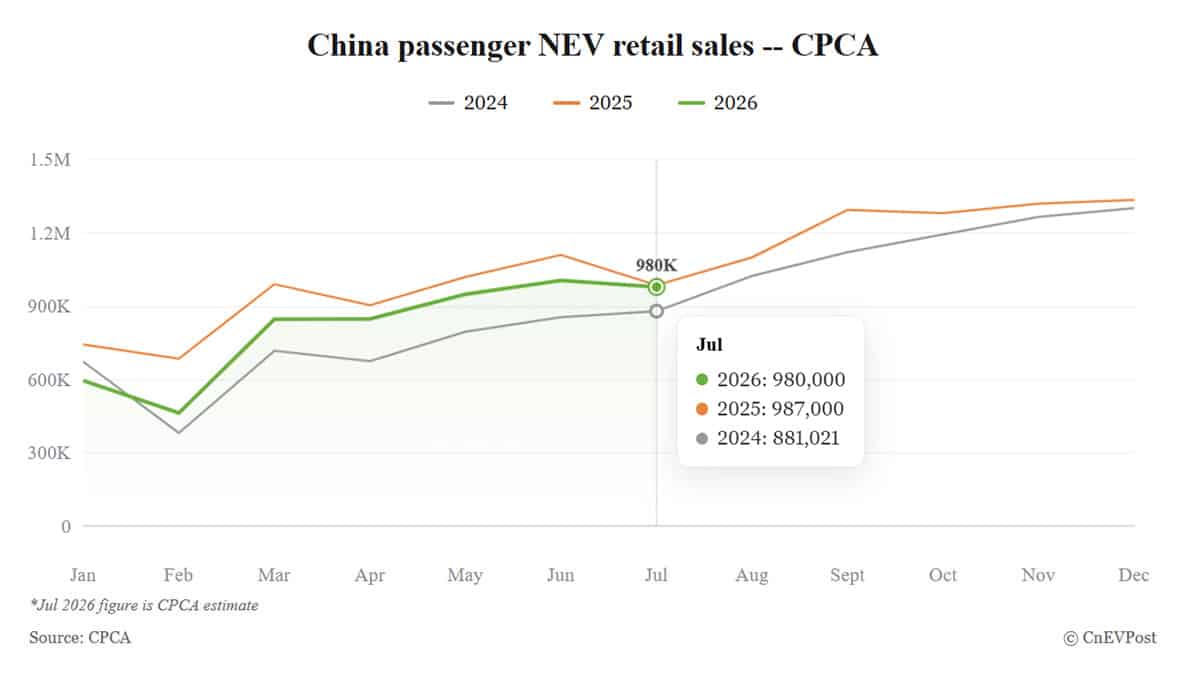

Here’s a surprising fact: even with a dip in overall car sales, new-energy vehicles (NEVs) are still riding high in China. June saw passenger vehicle retail sales hit 1.651 million units, marking a drop of 21% compared to last year, but up 9% from May. What does this mean for buyers? If you’re eyeing an electric vehicle, the market is shifting rapidly, and it’s time to pay attention.
For the first half of 2026, cumulative retail sales stood at 8.75 million units, down 20% year-on-year. Despite this, the trend is showing signs of improvement, particularly in NEVs. Weekly sales surged through June, with daily averages climbing from 33,000 units in the first week to 82,000 units by the end of the month. The final week, usually the strongest, did see an 18% decline year-on-year, but it was still a solid 26% increase from May.
| Metric | Value | Notes |
|---|---|---|
| Total Passenger Vehicle Sales (June) | 1.651M units | Down 21% YoY, up 9% MoM |
| Total NEV Sales (June) | 1.037M units | Down 7% YoY, up 9% MoM |
| NEV Penetration Rate | 62.8% | Major growth pillar |
| Wholesale Deliveries (June) | 2.376M units | Down 4% YoY, up 7% MoM |
| NEV Wholesale Deliveries (June) | 1.506M units | Up 22% YoY, up 11% MoM |
Looking at wholesales, the numbers tell a different story. Wholesale deliveries reached 2.376 million units in June, down 4% year-on-year but up 7% month-on-month. For NEVs, wholesale deliveries shot up to 1.506 million units, a 22% increase year-on-year. That’s a clear sign that consumers are still investing in electric vehicles.
So, why the overall drop? The CPCA points to some temporary factors: last year’s pre-subsidy rush created a high baseline, and there wasn’t much fresh government stimulus to spark new interest. Plus, the college exam season and the World Cup pulled consumer focus away from car buying. But when you look at the long game, NEVs are proving to be the lifeblood of the market.
Production numbers reflect this shift as well. Gasoline-powered vehicle output plummeted to 335,000 units in June, down 47% year-on-year. In stark contrast, production of hybrids only dipped 17% year-on-year, showing that traditional vehicles are quickly losing ground.
What does this mean for buyers? If you’re considering an NEV, the market is clearly leaning in your favor. Charging infrastructure is expanding, and with brands like BYD pushing the envelope with their in-house battery tech, the future looks bright. If you’re on the fence, now might be the time to jump in.
With NEV sales comprising over 62% of the total market, it’s clear that electric and hybrid vehicles aren’t just a passing trend in China. They’re becoming the standard. So, should you buy now or wait? If you want to avoid the early adopter blues, keep an eye on how new models are rolled out, but don’t sleep on the current offerings—they’re more than capable of meeting your needs.
For further insights into the evolving landscape of electric vehicles, check out our article on NEV retail sales trends and see how brands like Tesla is performing in China.
Stay tuned as we keep tracking these shifts in the market!