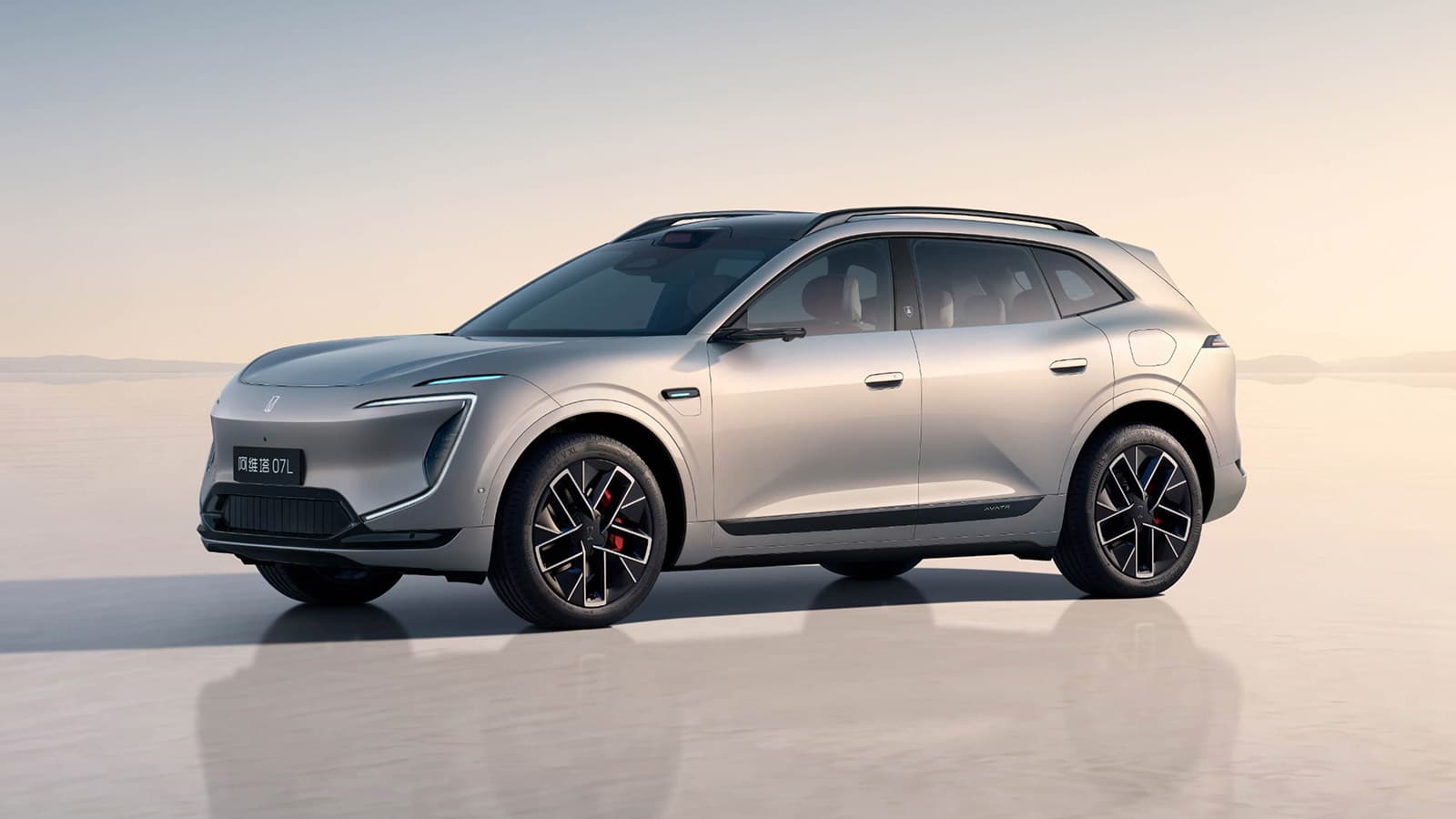

Avatr has put a bigger, pricier 07 on the board, and the pitch is easy to read: more room, more hardware, same tech-first attitude. On July 17, the brand opened pre-sales for the Avatr 07 L at 249,900 RMB and 279,900 RMB. That puts it in the same zone as a lot of hot Chinese EV SUVs, so this won’t be a quiet launch.
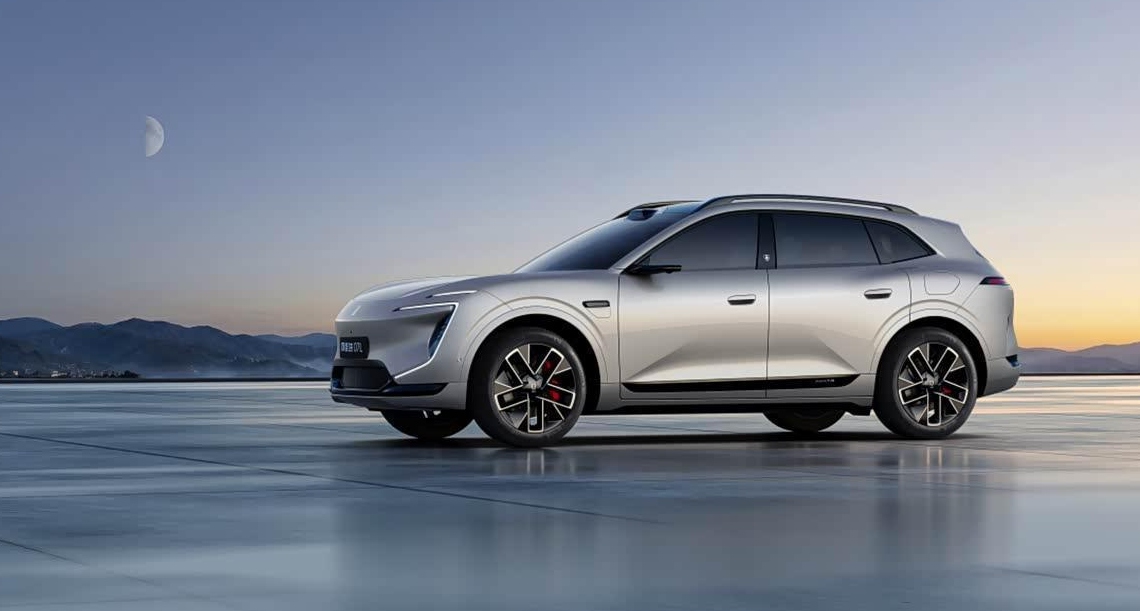
The new car is billed as a “large five-seater”, but the real change is simple. The wheelbase stretches to 2,990 mm, up from 2,940 mm on the regular Avatr 07. That extra 50 mm matters more than the badge on the tailgate. It usually shows up in rear legroom, a calmer back seat, and a car that feels less like a compact tech pod and more like a proper family SUV. Avatr also loaded it with an 896-line LiDAR setup, which gives the car the kind of sensor package buyers now expect if they’re paying near 300,000 RMB.
| Metric | Value | Notes |
|---|---|---|
| Pre-sale price | 249,900 RMB | Entry version |
| Pre-sale price | 279,900 RMB | Higher trim |
| Wheelbase | 2,990 mm | 50 mm longer than the standard Avatr 07 |
| Length / width / height | 4,910 / 1,980 / 1,650 (1,670) mm | Mid-size SUV footprint |
| LiDAR | 896-line | Part of the driver-assist package |
| EREV range extender power | 110 kW | 1.5T setup |
| BEV battery | 87.301 kWh | Used for the pure electric model |
| BEV range | 650 km / 725 km | Depending on version |
Design: the usual Avatr script, stretched
The Avatr 07 L keeps the brand’s “Future Elegance” look, and if you know the original car, this one feels familiar right away. The front end is still clean and grille-free, with slim lighting that does most of the visual work. It’ll be sold in Matte White, Ink Black, Rock Grey, Star Purple, and Crescent Silver, which is a decent spread without drifting into the overdone satin-gold stuff some brands love lately.
From the side, the stretched body is the whole story. The roofline still drops in a way that gives the car some movement, but the longer wheelbase changes the stance. It looks less compressed than the standard 07. Semi-hidden door handles and electronic side mirrors keep the tech theme going, though those bits matter more to showroom appeal than day-to-day ownership. At the rear, the V-shaped window line and full-width taillight keep things tidy. A roof spoiler finishes it off without turning the car into a styling exercise.
If you want a better sense of where Avatr is trying to position this brand, have a look at Avatr 07 L styling and first look and the earlier stretched Avatr 07L teaser. The message hasn’t changed: Avatr wants to sell design with enough substance underneath to keep Chinese EV buyers interested after the first week.
Interior and Avatr 07 L tech
Inside, the layout mirrors the regular Avatr 07. You get a 15.6-inch floating central display, a 35.4-inch panoramic “Star Ring” screen, and dual 6.7-inch streaming rearview mirror displays. That’s a lot of glass and pixels, but this is the class where buyers expect that. The real question is whether the cabin still feels calm once you’ve spent a month with it, because some of these screen-heavy SUVs age badly in daily use.
Avatr says the headrests and shoulder supports are wider, which should help on longer trips. The rear vents have also been reshaped and now include a touch-sensitive control panel. Small detail, but that sort of thing can make a cabin feel more expensive than a spec sheet suggests.
Powertrain choices and real-world range
The EREV version uses a 1.5T range-extender system, with the extender itself making 110 kW. Single-motor versions deliver 231 kW, while tri-motor versions are listed at 131 kW/200 kW/200 kW. Battery packs come in 39.05 kWh and 52.01 kWh sizes, with pure electric ranges of 197 km, 240 km, and 270 km. For a range-extended SUV, those numbers make sense on paper, but buyers should still think about how often they’ll actually charge. If your commute is short and you can plug in at home, the smaller pack may be enough. If not, you’ll spend more time leaning on the petrol generator than the brochure suggests.
The pure electric version goes harder. The single-motor model makes 305 kW, while the tri-motor setup is rated at 210 kW/251 kW/251 kW. Avatr pairs that with an 87.301 kWh battery and quotes 650 km and 725 km of range. Real-world numbers will land lower, as they always do, especially on highways and in cold weather. Still, that’s a respectable figure for a mid-size SUV that isn’t pretending to be a stripped-down value play.
Should you wait for the Avatr 07 L?
For buyers shopping in this price band, the Avatr 07 L is aimed straight at cars like the Xiaomi YU7, and the comparison makes sense. Xiaomi brings brand heat and a tight electronics story. Avatr counters with Huawei’s Qiankun intelligent driving system, HarmonyOS cockpit software, and CATL battery tech. That combination gives it a stronger hardware story than many rivals, especially for people who care about driver assist and cabin integration.
The EREV version will have to fight the Avatr 07L pre-sales breakdown crowd and models like the Luxeed R7. Luxeed may be the sharper straight-up tech rival, but Avatr has a more distinctive design identity. That matters in China, where buyers are getting bored of cars that all look like they came from the same CAD file.
My read is simple. If you want a family SUV with Huawei tech, CATL battery support, and a cabin that tries harder than most, the 07 L is worth a look. If you care more about resale value, dealer footprint, or a brand with a longer track record, waiting is still sensible. Avatr is getting better, and it now has a clearer product idea than it did two years ago. The remaining question is whether the market is ready to pay this much for it. That answer will come fast once deliveries begin after the August 8 launch.
For readers watching Avatr’s overseas push too, the brand is also beginning to move beyond China, as seen in Avatr’s entry into Greece. That doesn’t change the buying advice here, but it does show the company is thinking beyond a single domestic launch cycle.