
Ten thousand pre-orders in an hour is the sort of number that gets attention. So does a 5,050 mm electric SUV with 637 hp, four LiDAR units and a top trim priced at 309,900 yuan ($45,610).
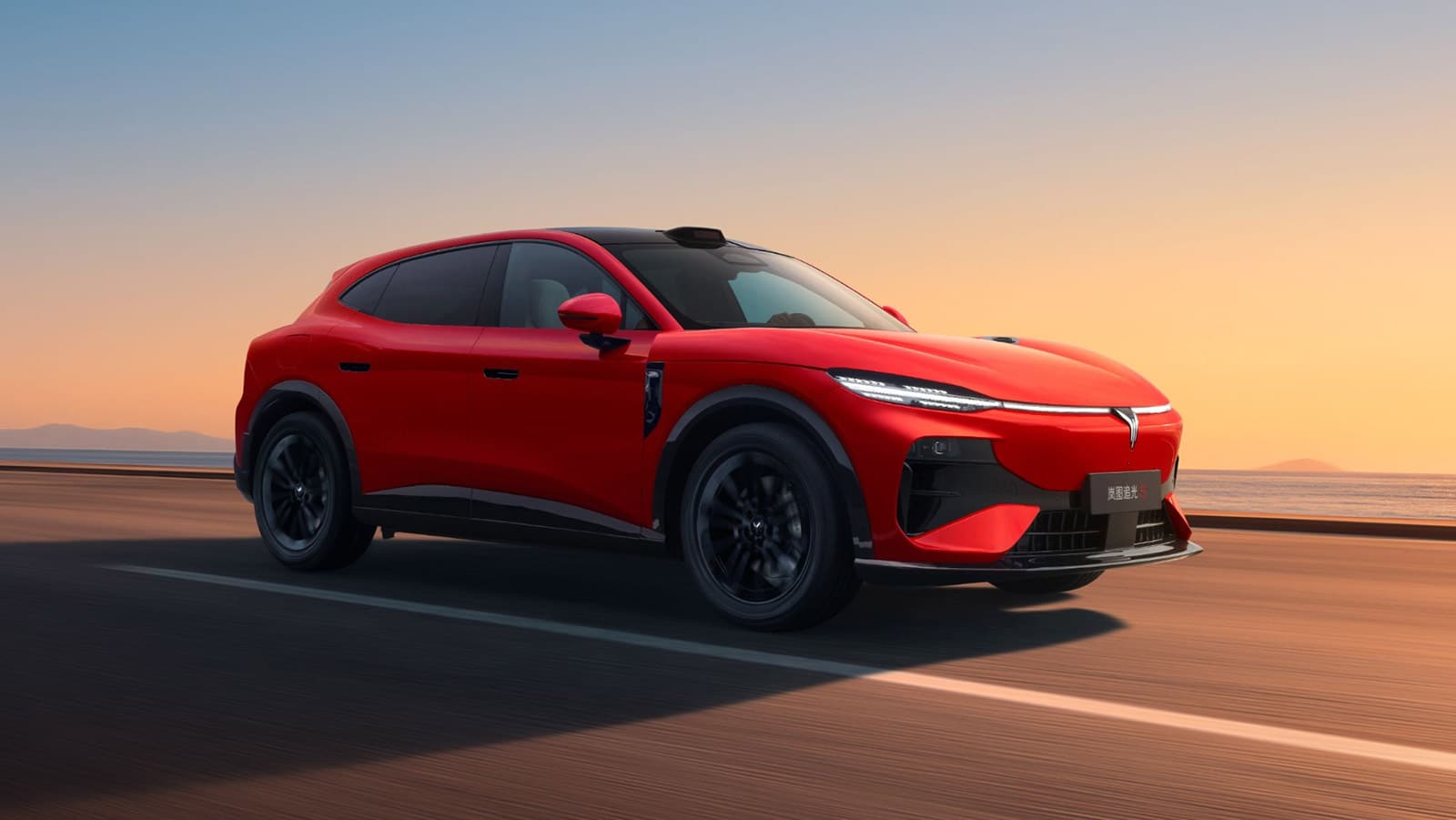
That’s Voyah’s new Passion S, and it’s being pushed straight at Xiaomi’s YU7. Voyah says the model is aimed at younger buyers, but the size and hardware make it a serious family SUV too, not just a style exercise. It measures 5,050 mm long, 1,998 mm wide and 1,656 mm tall, with a 3,000 mm wheelbase.
| Metric | Value | Notes |
|---|---|---|
| Ultra+ pre-sales price | 309,900 yuan ($45,610) | All-wheel drive, 4 LiDAR units |
| First-hour pre-orders | 10,347 | Announced shortly after pre-sales opened |
| Dimensions | 5,050 x 1,998 x 1,656 mm | Length, width, height |
| Wheelbase | 3,000 mm | Matches the SUV’s large footprint |
| AWD output | 475 kW, 637 hp | 175-kW front motor, 300-kW rear motor |
| 0 to 100 km/h | 3-second range | Voyah’s stated acceleration claim |
| Battery and range | 98.1-kWh, 700 km CLTC | AWD version |
| RWD filing | 300 kW, up to 740 km CLTC | Single-motor version in regulatory filings |
Voyah Passion S, Huawei ADAS, and the hardware race
The all-wheel-drive version pairs a 175-kW front motor with a 300-kW rear motor. Put together, that makes 475 kW, or 637 hp. That’s plenty for a big SUV, and the 0 to 100 km/h claim sits in the 3-second range. A 98.1-kWh battery gives it a 700 km CLTC range, while the rear-wheel-drive version filed for approval uses a single 300-kW motor and stretches to 740 km on the same test cycle.
The tech story matters almost as much as the speed figure. Voyah uses Huawei’s Qiankun ADS 5 and an 896-channel Huawei LiDAR. The company says the sensor can spot obstacles as small as 14 cm high from 120 m away. Total sensing hardware adds up to 32 components: 4 LiDAR units, 3 forward-facing distributed 4D millimeter-wave radars, 2 rear millimeter-wave radars, 11 high-definition cameras and 12 parking sensors. If you’ve followed Avatr 07L pre-sales with Huawei tech, the playbook will look familiar. Huawei-branded driver assist is becoming its own selling point.
How it fits the Chinese EV market
Styling is doing some work here too. The Passion S has been described by some as a so-called FUV, or Ferrari Utility Vehicle, because of its strong resemblance to the Ferrari Purosangue. That sort of look is catnip for social media, and it helps a new model cut through a very crowded 250,000 yuan to 350,000 yuan SUV class.
That class is already busy. Xiaomi’s YU7 has the brand heat. Luxeed R7 already uses Huawei’s Qiankun driver-assistance system. Voyah is trying to answer with size, tech and a sharp first number, but the rest of the pricing still matters. We’ve seen how quickly the market can swing when a product lands in the right bracket, as with the Lynk & Co 10 at 209,900 RMB. And Voyah’s own push upmarket is part of a broader pattern, which is why the Voyah Dreamer 9 at 500,000 RMB matters too.
Should you buy it? If you want a big, fast Chinese EV SUV with Huawei hardware and you like the styling, it’s worth watching. If you care about final trim prices, local service coverage, or resale outside China, wait for the full lineup before signing anything. Voyah says this model is part of its premium push in 2026, and that’s the real test, not the first-hour pre-order count.
($1 = 6.7939 yuan)