
A 725.9 kg battery pack tells you exactly what BYD is trying to do with the Da Han: build a Chinese flagship sedan that can talk range, size, and price in the same breath.
The all-electric BYD Da Han, also referred to as the BYD Great Han, has appeared in China’s purchase tax reduction list published by MIIT. The headline figure is the battery: a 102.326 kWh LFP pack from FinDreams, BYD’s own battery arm. BYD previously listed it as 102.3 kWh, and either way, it’s a big pack. At 725.9 kg, it accounts for more than 30% of the car’s curb weight.
BYD Da Han EV range and battery specs
That in-house battery supply is BYD’s real advantage here. FinDreams gives BYD control over cost, chemistry, packaging, and production timing in a way most rivals can’t match. For buyers, the useful bit is simpler: LFP usually means lower fire risk, long cycle life, and less anxiety about charging to 100% compared with many nickel-rich packs. The trade-off is weight. This car carries a lot of it.
The rear-wheel-drive Da Han uses one electric motor rated at 370 kW, or 496 hp. That’s already stronger than many performance sedans buyers would have called quick a few years ago. Depending on equipment, the RWD version is rated at 970 to 1,008 km under China’s CLTC test cycle, with curb weight ranging from 2,260 to 2,325 kg.
| Metric | Value | Notes |
|---|---|---|
| Battery Pack | 102.326 kWh LFP | FinDreams pack, also cited as 102.3 kWh |
| Battery Weight | 725.9 kg | Over 30% of curb weight |
| RWD Output | 370 kW, 496 hp | Single motor |
| AWD Output | 570 kW, 764 hp | Dual motor peak power |
| EV Range | 820 to 1,008 km CLTC | AWD to RWD, depending on trim |
| Dimensions | 5256/1999/1510 mm | Wheelbase: 3,130 mm |
| Expected Price | Around 300,000 yuan, 44,290 USD | China market estimate |
The top Da Han AWD gets two motors with combined peak output of 570 kW, or 764 hp. For context, that’s deep into high-end performance EV territory, though the AWD car is heavy at 2,505 kg. Its CLTC range drops to 820 to 880 km. Expect real-world highway driving to land well below the CLTC figure, as usual in China’s rating system.
Great Han size, price, and the S-Class comparison
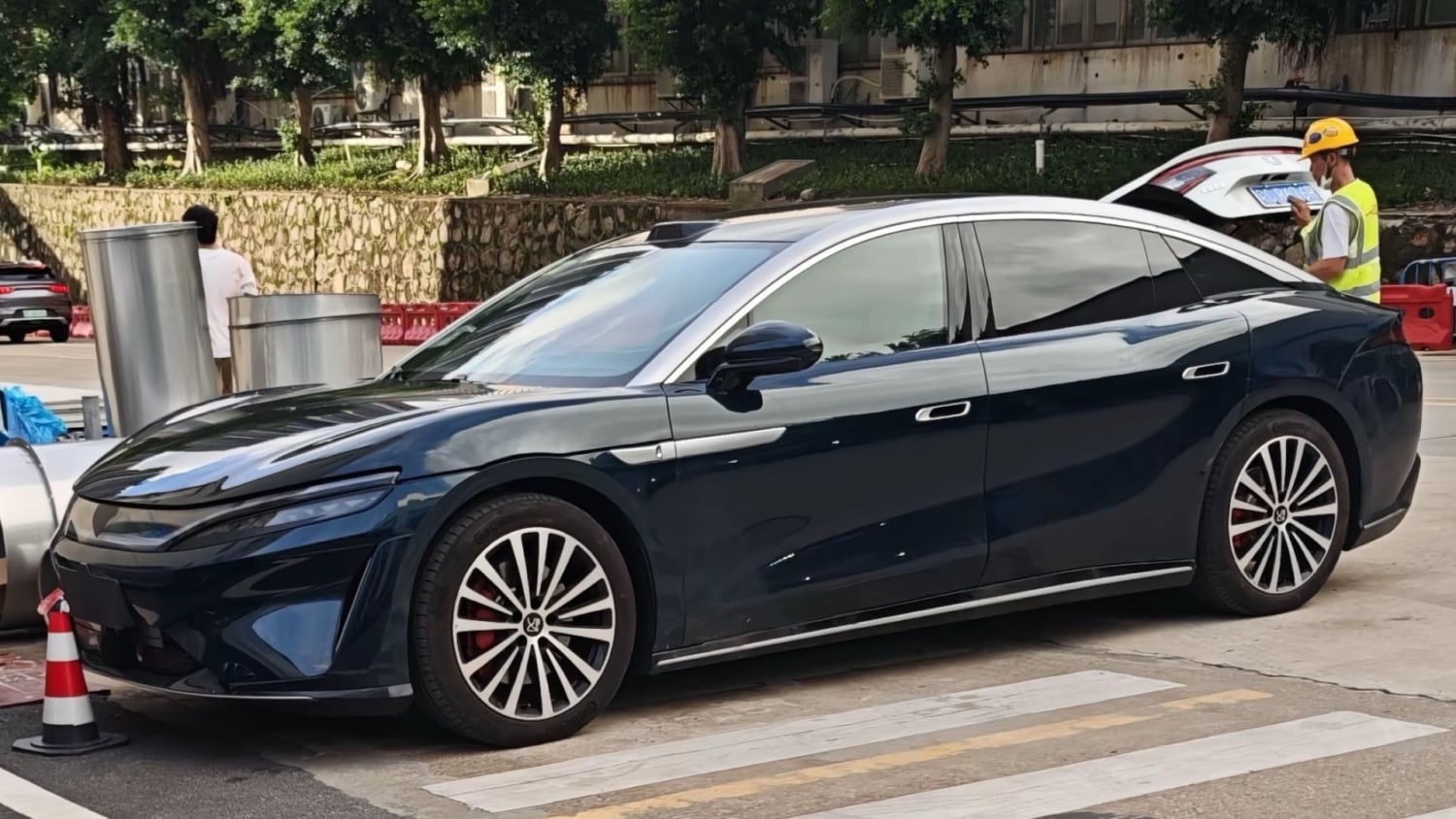
The Da Han measures 5256/1999/1510 mm, with a 3,130 mm wheelbase. It’s 66 mm longer than a standard Mercedes-Benz S-Class, which tells you the buyer BYD is chasing. The car has already been seen on Chinese roads without camouflage, so the launch window looks close. Earlier official material and images of the BYD Great Han flagship D-class sedan pointed in the same direction: big body, premium intent, Dynasty badge.
There’s also a DM-i plug-in hybrid version. It uses a 1.5-liter turbocharged BYD472ZQB petrol engine rated at 115 kW, or 154 hp, plus a 200 kW, 268 hp electric motor. Its 54.489 kWh LFP battery gives it up to 470 km of electric driving. That’s a massive electric range for a PHEV, and it could be the smarter pick for buyers who do long motorway runs or live where public charging is patchy.
Should you buy the BYD Da Han or wait?
At around 300,000 yuan, or 44,290 USD, the Da Han could make life awkward for older luxury sedans and newer Chinese premium EVs. The standard BYD Han sold 3,285 units in China in June, while the more powerful Han L delivered 584 units, so BYD isn’t starting from zero. Still, a flagship sedan is a tougher sell than a family SUV.
If you’re in China, the Da Han EV looks worth waiting for, especially if the final price stays near 300,000 yuan. Charging access, BYD service coverage, and local resale support are all on its side. Outside China, I’d be more cautious. Until export plans, warranty terms, charging compatibility, and parts supply are clear, the safer move is to watch how the first domestic cars perform. The earlier BYD Da Han teaser coverage set expectations high, but the battery numbers now show the real character of the car: big range, big mass, and a price that could make German luxury buyers look twice.