
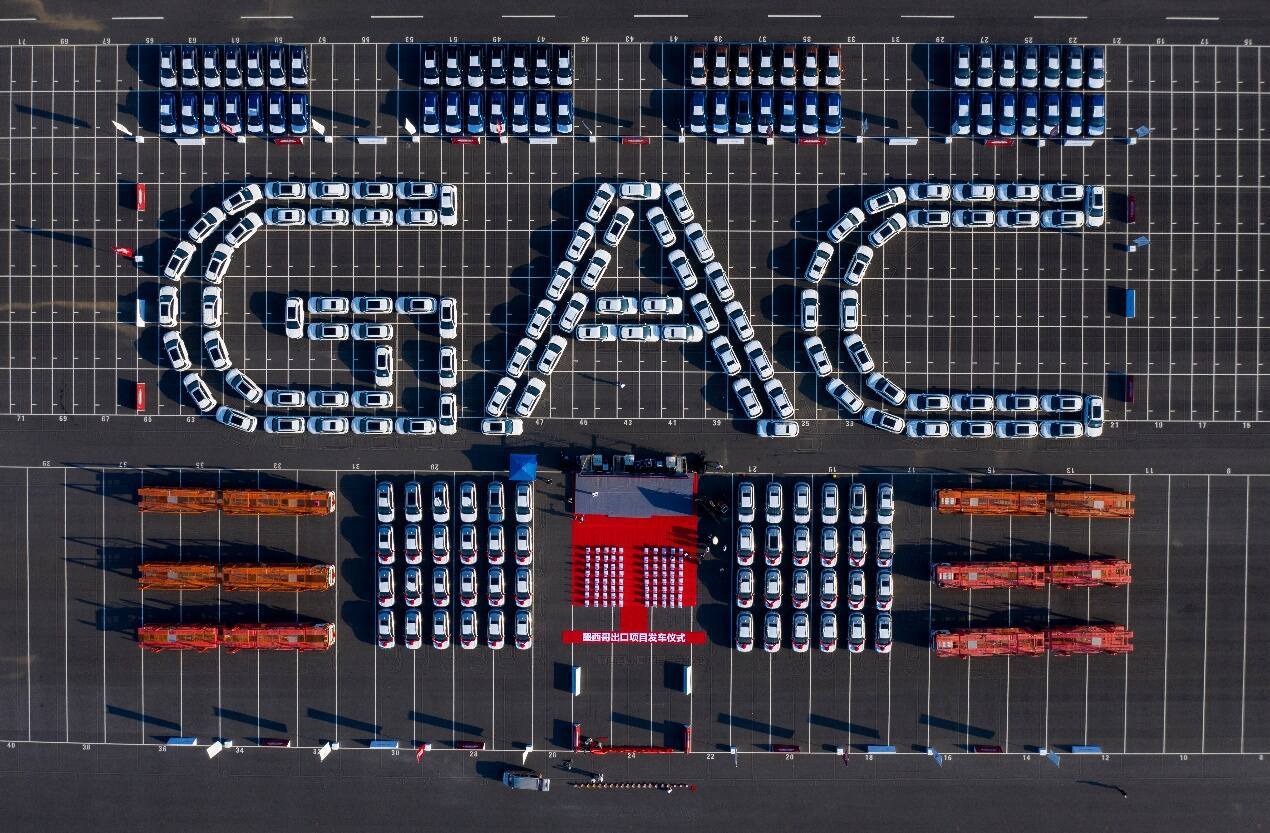
Thirty million vehicles is the kind of number most carmakers never get near. GAC has now done it, and the car chosen for the photo op says a lot about where the company thinks the next fight is: a Trumpchi M8 PHEV, handed over to Thai actor Tony Jaa.
On July 16, GAC Group said its 30 millionth vehicle had rolled off the production line. It took 29 years to get there, starting with its first vehicle and ending, for now, with a plug-in hybrid MPV aimed at buyers who still want long-distance comfort without giving up electric driving in town.
GAC is now the fifth Chinese auto group to pass 30 million units of cumulative production, after FAW Group, SAIC Motor, Dongfeng Motor and Changan Automobile. That puts it in old-guard company. The difference is that GAC is trying to look less like a joint-venture factory operator and more like a global Chinese brand house.
GAC 30 million vehicle milestone: why the Trumpchi M8 PHEV matters
The Trumpchi M8 PHEV wasn’t picked by accident. MPVs remain a serious business in China and Southeast Asia, where chauffeur use, family travel and corporate fleets still carry weight. A plug-in hybrid version gives GAC an easier pitch in markets where public charging is patchy and long highway trips are common.
That’s the buyer angle people miss. A pure EV can look better on a spec sheet, but in Thailand, Brazil or parts of the Middle East, a PHEV often feels less risky. You charge when you can. You still have petrol when you can’t. For a brand trying to win trust abroad, that matters more than a flashy launch video.
GAC’s current lineup covers sedans, SUVs and MPVs, with gasoline, plug-in hybrid, range-extended and battery-electric models. The group sells cars under its own GAC Trumpchi and Aion brands, while GAC Honda and GAC Toyota remain major joint ventures.
GAC sales in 2026: own brands are doing the heavy lifting
The first half of 2026 was not explosive for GAC as a whole, but it was telling. Official data show the group sold 773,100 vehicles, up 2.35% year on year. That’s modest growth, almost flat by China EV war standards.
The more interesting number sits inside the group. GAC’s self-owned brands sold 346,000 units, up 35.69% year on year. The joint-venture business stayed broadly stable, which is a polite way of saying Honda and Toyota are no longer the whole story here.
| Metric | Value | Notes |
|---|---|---|
| Cumulative production | 30 million vehicles | Reached after 29 years |
| H1 2026 group sales | 773,100 vehicles | Up 2.35% year on year |
| H1 2026 self-owned brand sales | 346,000 units | Up 35.69% year on year |
| Charging coverage | 213 cities | “9 Vertical, 10 Horizontal” network |
| Self-owned charging points | More than 27,000 | Nationwide network in China |
| H1 2026 self-owned brand exports | 121,500 vehicles | Up 132% year on year |
| Hong Kong BEV share | More than 11% | First five months of the year |
| Thailand June sales | Up 207% from May | Month-on-month growth |
| Overseas footprint | 110 countries and regions | Across five major regions |
New models are coming in the second half of the year, including the Trumpchi Yue 7, Aistaland GX7 and a new Aion intelligent sport sedan. The Aistaland name is worth watching because GAC is working with Huawei in the premium EV space, including the Aistaland GT7 premium EV project. Huawei doesn’t need to build the car to shape the cabin, software and driver-assist story.
GAC charging network and Aion EV ownership
GAC says it has built a nationwide “9 Vertical, 10 Horizontal” charging network covering 213 cities, with more than 27,000 self-owned charging points. In China, that helps Aion owners more than people may realize. Charging confidence still sells cars, especially for buyers who don’t have a private home charger.
Outside China, buyers should be more cautious. Aion and Trumpchi models can be tempting on price and equipment, but charging compatibility, dealer training, parts supply and resale value will decide the ownership experience. A cheap EV stops feeling cheap if a damaged bumper or battery-related repair takes months.
GAC exports are now the growth story
GAC’s overseas business is moving faster than its domestic total. Exports of self-owned brands reached 121,500 vehicles in the first half of 2026, up 132% year on year and already close to the company’s full-year export volume for 2025.
In the Americas, several core GAC models ranked among the top sellers in their segments, with Brazil and Colombia still growing. In the Asia-Pacific region, GAC took more than 11% of Hong Kong’s battery-electric vehicle market in the first five months of the year. Thailand was sharper still: June sales rose 207% compared with May.
Europe is the harder test. GAC is building local manufacturing, sales and service operations while bringing new energy vehicles into more markets. Spain is already part of that push through locally assembled GAC Aion V and Aion UT models, which is the kind of move Chinese brands need if they want to be taken seriously after the first shipment lands.
The group’s international business now spans Asia-Pacific, the Middle East, Africa, Europe and the Americas, covering 110 countries and regions. It operates 746 sales and service outlets, six overseas manufacturing plants and nine overseas parts warehouses.
Should buyers care about GAC’s 30 million milestone?
Yes, but not because 30 million vehicles makes the next GAC product automatically good. Scale can hide average cars as easily as it can fund better ones.
The reason to care is simpler: GAC now has enough manufacturing depth, charging assets in China and export volume to stay in the fight. Its “One GAC 2.0” plan shifts the company away from basic exports toward local research and development, manufacturing, supply chains, sales and after-sales service. By 2030, GAC wants to reach 120 countries and regions, operate more than 2,000 overseas outlets and sell 1 million vehicles a year globally.
If you’re in China, an Aion or Trumpchi should be judged like any mainstream rival: price, range, cabin quality, charging access and dealer support. If you’re abroad, wait until the local service network is real, not promised in a launch deck. The product may be ready before the ownership experience is.