
Did you know that the average profit margin for China’s vehicle manufacturers plummeted to just 1.5% in the first half of 2026? That’s the lowest it’s been in nearly a decade. This alarming figure reveals an industry grappling with rising production but dwindling profits—definitely not the kind of news you want to hear if you’re considering a new car purchase.
According to data from the China Association of Automobile Manufacturers (CAAM), profit margins have been on a downward spiral for years. The sector managed a 5% profit margin in 2023, but that fell to 4.3% in 2024 and then to 4.1% in 2025. The trend worsened dramatically in 2026, where the average profit margin dropped from 3.2% in Q1 to 1.5% by mid-year. For context, that’s well below the 6.1% average profit margin for larger industrial enterprises in the country.
| Metric | Value | Notes |
|---|---|---|
| Average Profit Margin (H1 2026) | 1.5% | Lowest in nearly a decade |
| Profit Margin (2023) | 5% | Declining over the years |
| Vehicle Price | RMB 200,000 ($29,500) | Net profit of about RMB 3,000 ($442) |
| Battery Cost Increase | RMB 4,000 – RMB 14,000 ($590 – $2,065) | Impact on vehicle manufacturing costs |
| Annual Vehicle Production Capacity | 40 million units | Domestic demand below 22 million |
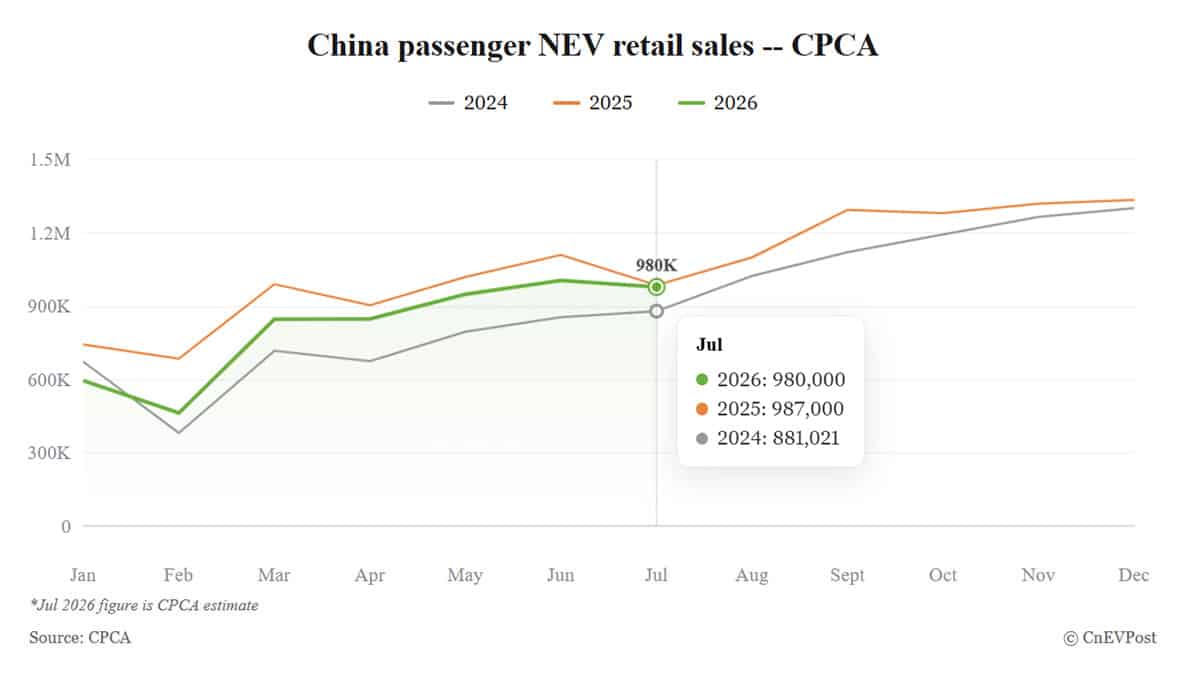
So, what gives? Chen Shihua, the deputy secretary-general of CAAM, points to fierce market competition as a major culprit behind these shrinking margins. Passenger vehicle sales in China dropped by over 20% year-on-year in the first half of 2026, while automakers kept pumping out new models and boosting production capacity. They’re using price cuts, trade-in subsidies, and financing deals to lure buyers, but all that’s doing is squeezing their profit margins further.
On top of that, rising costs for essential materials like lithium carbonate, copper, and automotive-grade chips are hitting manufacturers hard. Battery and semiconductor costs alone have driven up production expenses by RMB 4,000 to RMB 14,000 per vehicle. This makes things even tougher for manufacturers already dealing with hefty R&D investments and the costs of building new factories.
To make matters worse, there’s a serious supply-demand imbalance. China’s production capacity stands at over 40 million vehicles a year, but consumer demand is hovering below 22 million. That means lots of idle factories and higher unit manufacturing costs. It’s like having a restaurant that can serve 100 customers but only has 20 showing up for dinner.
In this shifting market, the profit pie is being redistributed. Instead of traditional suppliers and dealerships reaping most of the rewards, technology firms focused on batteries and advanced driver assistance systems are grabbing the lion’s share of the profits. Meanwhile, online marketing trends are draining advertising budgets away from brick-and-mortar dealerships, which are already struggling to stay afloat.
Right now, only a handful of players, like BYD and Geely, are managing to hold onto profit margins of around 2% to 4%. The rest, particularly joint-venture brands and many EV startups, are either breaking even or losing money. If you’re in the market for a new EV, it’s worth considering these dynamics. Do you want to ride the wave of a high-risk investment, or would you rather wait for more stability?
As a buyer, it’s essential to weigh these factors. Sure, the tech in these vehicles is impressive, but the market is shaky. Will the car you buy today hold its value tomorrow? With the current state of the market, that’s a big question mark. If you’re looking for a reliable, future-proof investment, it might be wise to sit tight for now and see how things shake out.