
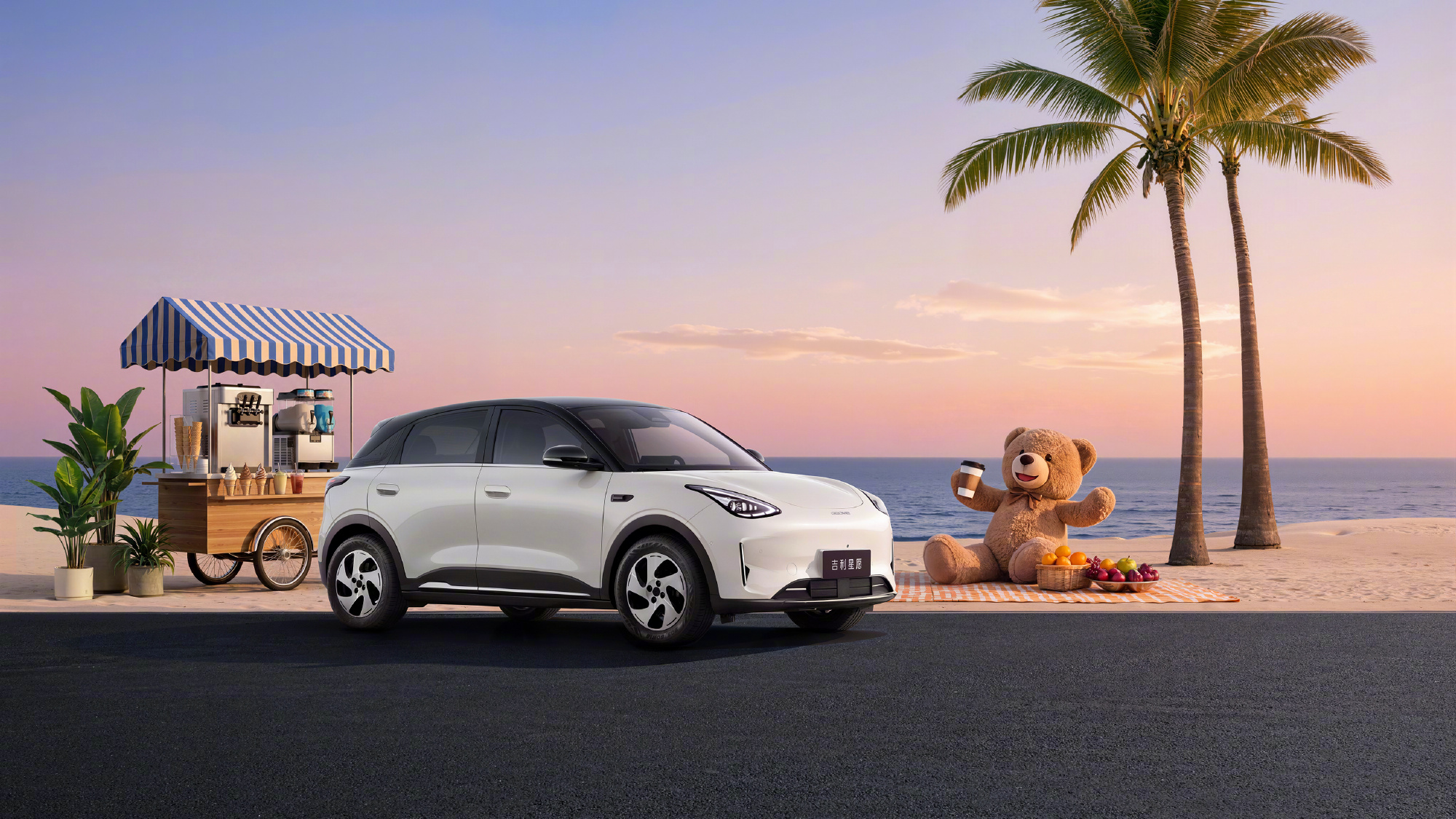
Eight hundred thousand cars in 664 days. For a small Geely EV that started life as a low-cost city sedan, that’s not a nice little success story. It’s a warning shot.
On July 16, Geely Galaxy said cumulative sales of the all-electric Xingyuan, sold overseas as the EX2, had passed 800,000 units. In China’s new energy vehicle market, where price cuts can create a one-month sugar rush, that pace is rare. The Xingyuan has been selling for nearly two years and it still hasn’t gone quiet.
Geely Xingyuan EX2 sales are doing real damage in China
The Xingyuan arrived in October 2024 as Geely Galaxy’s first A0-segment battery electric sedan. Translation: small footprint, family-use packaging, low running costs, built for people who need a daily car rather than a rolling tech demo.
In May this year, Geely refreshed the Xingyuan with changes to driving dynamics, the electric powertrain, driver assistance and cockpit tech. The promotional starting price was RMB 61,800, or about $9,116. That price point matters. It puts the car right in the zone where Chinese buyers stop comparing EVs with other EVs and start asking why they’d buy a petrol hatchback at all.
This is also where Geely’s scale starts to bite. The company doesn’t have BYD’s Blade Battery story, but it has deep supplier ties, huge manufacturing volume and enough brand coverage to sell cheap EVs without looking like a bargain-bin startup. If you follow Geely’s wider product push, the pattern is clear in models like the Geely Galaxy M7 compact PHEV SUV: aggressive pricing, broad family appeal, and tech features that would have been premium kit a few years ago.
| Metric | Value | Notes |
|---|---|---|
| Cumulative Xingyuan/EX2 sales | 800,000+ units | Reached in 664 days |
| China launch | October 2024 | Geely Galaxy’s first A0-segment BEV sedan |
| Updated model price | RMB 61,800 ($9,116) | Promotional starting price in May |
| Geely Galaxy June sales | 108,206 vehicles | Up 20% year on year and 32% from May |
| Xingyuan June sales | 50,906 units | Nearly half of Geely Galaxy’s monthly volume |
| Xingyuan H1 2026 sales | 249,418 units | Up 21% year on year |
| Australia entry price | AUD 26,490 | EX2 deliveries began in July |
| Malaysia H1 sales | 10,665 units | 33.6% of Malaysia’s BEV market as Proton e.MAS 5 |
Why the A0 electric car segment is suddenly the main fight
In June, Geely Galaxy sold 108,206 vehicles, up 20% year on year and 32% compared with May. The Xingyuan alone delivered 50,906 units. Nearly one in two Geely Galaxy cars sold that month was this small EV.
During the first half of 2026, Xingyuan sales reached 249,418 units, up 21% year on year. It became China’s best-selling passenger vehicle across all powertrain types during the period. In the first quarter, it also ranked among the world’s top three best-selling new energy vehicles, and was the only Chinese-branded model in that group.
The bigger point is the segment. CPCA data shows wholesale sales of A0-segment battery electric vehicles hit 314,000 units in June 2026. That was 32% of China’s total BEV market, nine percentage points higher than a year earlier, making it China’s largest pure-electric vehicle segment.
That tells you where the money is moving. Chinese buyers still love big screens and fast charging claims, but the mass market wants cheap, easy EVs that fit apartment parking spaces and don’t cost much to insure. The Xingyuan sits right there.
Geely EX2 overseas rollout: Australia, Pakistan and Malaysia
Geely is now pushing the EX2 outside China. In July, the model entered Australia with deliveries starting at AUD 26,490. That’s a sharp price for a new EV, especially in a market where entry-level electric cars still carry sticker shock for many households.
Pakistan is next on the list. Geely has signed an agreement with an importer and plans to enter the market in Q3 2026 through CBU imports, starting with the EX5 and EX2 EVs. We’ve covered that rollout in more detail here: Geely Galaxy models heading to Pakistan.
Malaysia may be the more telling case. There, the overseas version of the Xingyuan is sold by Proton as the e.MAS 5. During the first half of this year, it sold 10,665 units, took 33.6% of the country’s BEV market, and ranked as Malaysia’s best-selling BEV. That’s what local branding can do. A Chinese EV with a familiar badge can move faster than one arriving cold with no dealer trust.
Should buyers buy the Geely Xingyuan EX2 or wait?
If you’re in China, the Xingyuan is hard to ignore. The price is low, the sales volume is huge, and that usually helps with parts supply, repair knowledge and resale confidence. A car that sells in these numbers becomes familiar to workshops quickly. That matters more than another inch of touchscreen.
Outside China, I’d be a little more careful. Australia’s AUD 26,490 starting price is tempting, but buyers should check charging plug compatibility, local warranty terms, dealer coverage and parts lead times before signing. Rated range also needs the usual EV reality check: city use will flatter it, highway use with air conditioning won’t.
For Pakistan, early CBU imports mean buyers should watch pricing after duties, service coverage and how quickly Geely can supply replacement parts. For Malaysia, Proton’s badge gives the e.MAS 5 a stronger aftersales story than a standalone Chinese launch would have. That could help resale values too, although used Chinese EV pricing abroad is still young and messy.
Geely has raised its annual export target twice this year. The company first aimed for 640,000 overseas sales in 2026, then lifted the target to 750,000 units. It now expects exports to exceed 900,000 vehicles this year.
That’s the part rival brands should take seriously. The Xingyuan isn’t winning because it has outrageous specs. It’s winning because Geely found the exact size and price that millions of buyers can justify. In China, that’s usually how a car stops being a trend and becomes traffic.