
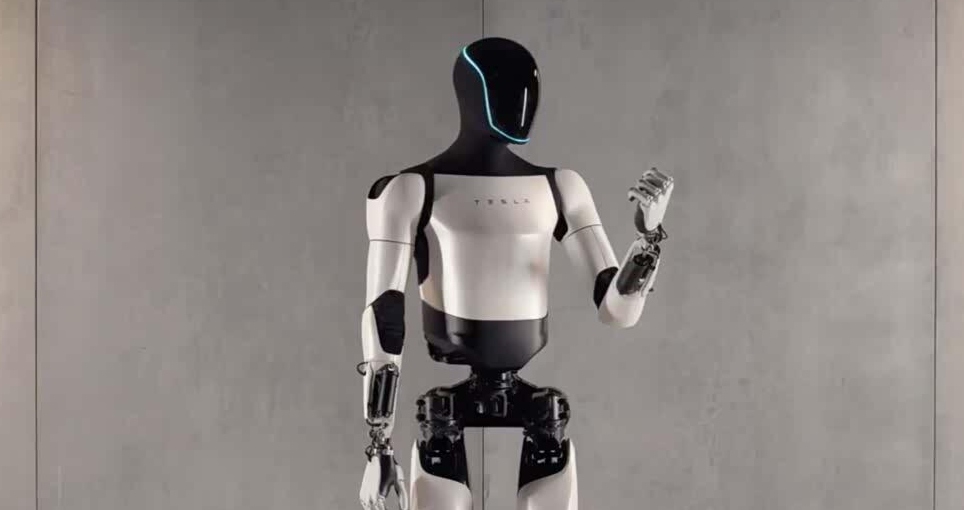
Tesla has officially announced that its Optimus humanoid robot has entered mass production as of the second quarter of 2026. The first batch of production units, designated as Optimus Gen-3, has already rolled off the assembly line and is currently undergoing internal testing.
The primary production hub for the robots is Tesla’s Fremont factory in California. The company has completely repurposed its original Model S/X flagship production lines for robot manufacturing. Tesla aims to complete the line conversion and commissioning within four months, with a designed annual production capacity of one million units. Meanwhile, the Shanghai Gigafactory has already deployed 50 Optimus Gen-3 units into its automotive assembly workshops. These robots are tasked with duties such as seat installation, interior assembly, component handling, and quality inspection, providing practical experience for large-scale global deployment. Plans for a second-generation robot production line at the Texas Gigafactory are also underway, with production expected to begin in 2027 and a long-term goal of reaching an annual capacity of 10 million units.
As Tesla’s first mass-produced humanoid robot, the Optimus Gen-3 stands 173cm tall and weighs 57kg. It features a walking speed of 1.2m/s (approximately 3.5km/h) and a maximum payload capacity of 20kg, making it suitable for a wide range of factory scenarios. In terms of endurance, it is equipped with a 2.3kWh 4680 battery, supporting 10 hours of continuous operation. A 10-minute fast charge is sufficient for a full day’s work, and with autonomous charging capabilities, the robot can operate 24 hours a day without interruption.
Regarding its intelligent systems, the robot is powered by the HW4.0 vision chip and 12 cameras, leveraging the same FSD (Full Self-Driving) pure-vision AI model used in Tesla vehicles. It can complete a “perception-decision-execution” loop in under 0.3 seconds, allowing for autonomous obstacle avoidance and precise identification of work targets. From a cost-control perspective, the unit price is set at $49,000, representing a 73% reduction in cost compared to the 2024 prototype. Approximately 70% of its core components are sourced from Chinese suppliers, and with large-scale production, the cost is expected to drop below $20,000.
To date, Tesla has not announced a specific date for public sales. The initial units will be prioritized for internal factory needs, with availability for external corporate and residential customers to be opened for pre-orders at a later stage.
Your daily pit stop for Chinese EV news, tech, and trends.