
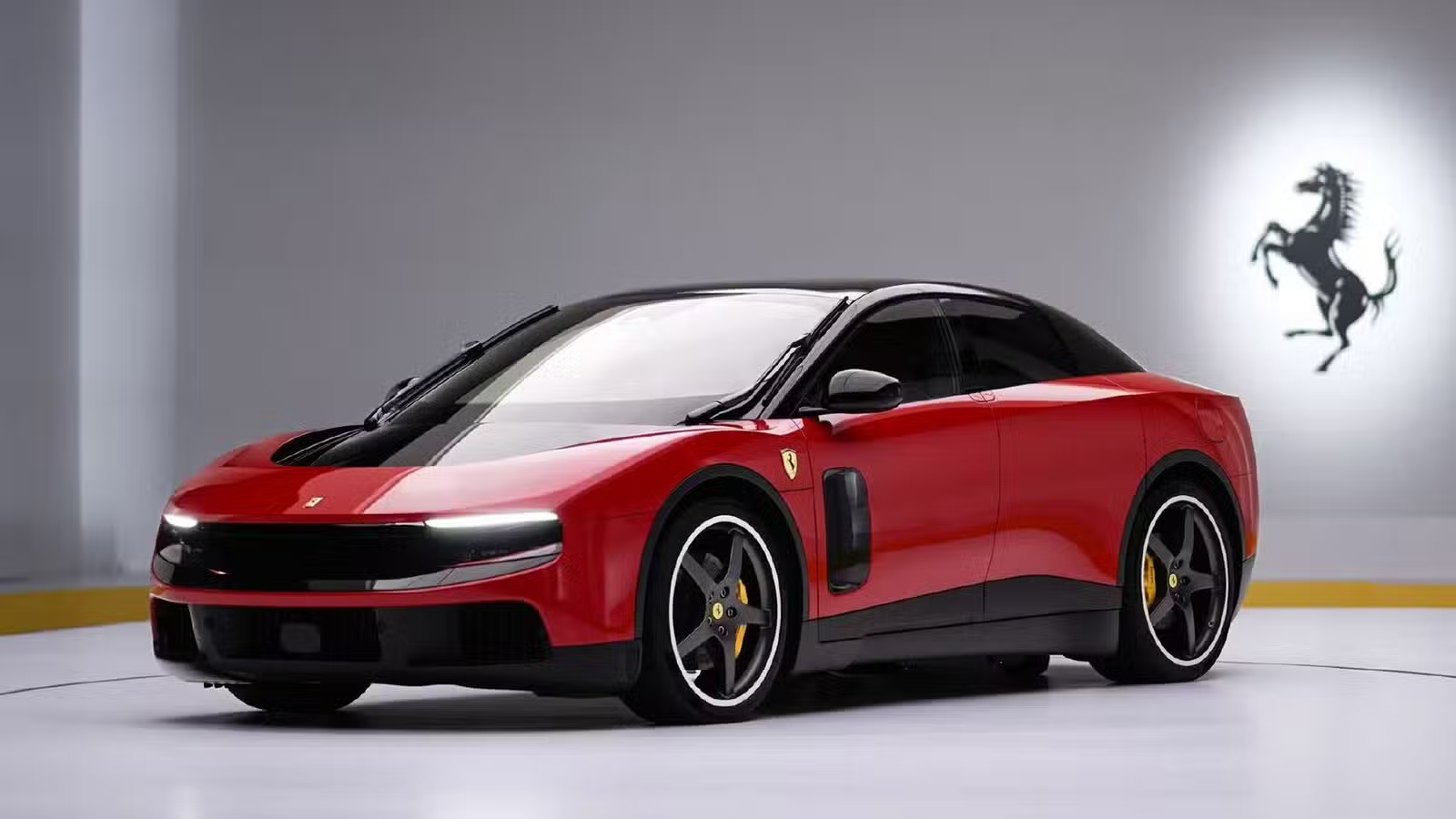
Ferrari’s first all-electric model, the Luce, is still available for order in China. That might surprise you, especially with reports flying around about it being sold out. But here’s the truth: authorized dealers confirm there are still units left to snag.
This electric beauty hit the Chinese market on June 26, starting at a jaw-dropping price of 3.988 million yuan (about $587,720). It’s not just another Ferrari; it’s the brand’s first four-door, five-seat EV. You’d expect a lot of hype, and there’s been plenty of chatter on social media claiming the first batch of 88 units was gone in a flash. But those claims? They lack credible sources, and Ferrari hasn’t backed them up either.
To get a clearer picture, Lanjinger reached out to a few authorized Ferrari dealers. All said the Luce is still on the market, requiring a hefty deposit of a few hundred thousand yuan to get your hands on one. Some dealers are asking for 400,000 yuan, while others are going for 500,000 yuan. And just a heads-up: once you sign the contract, that deposit is non-refundable. You’ll need to cough up another payment when production kicks off, with the remaining balance due upon delivery.
Speaking of deliveries, those who place their orders now can expect their cars to start rolling out in the third quarter of next year. The earlier you get in line, the sooner you’ll be able to fire up that electric motor.
Now, don’t get too excited just yet—Chinese customers can’t even test drive the Luce right now. There’s only one engineering display car in the Asian market, and it’s busy touring various locations. Actual test drives won’t be available until next year.
Pricing Comparison: Luce in China vs Europe
The Luce made its debut in Europe earlier, where it starts at 550,000 euros, or around $626,950. That’s a cool $39,230 more than in China. It makes you wonder about the pricing strategy here. Is Ferrari positioning the Luce to capitalize on the booming Chinese luxury EV market?
What’s particularly interesting is the Luce’s design. Instead of coming from Ferrari’s own design center, this model was crafted by LoveFrom, a team led by former Apple design guru Jony Ive. This is a significant departure from Ferrari’s traditional aesthetic, moving away from the classic two-door sports cars to a more family-centric four-door layout. This change has sparked some heated discussions, especially among traditionalists. Former Ferrari chairman Luca Cordero di Montezemolo even voiced concerns that this could tarnish the brand’s legendary image.
But not everyone agrees. Li Boxiao, deputy general manager at Voyah, took to Weibo to clarify that Chinese automakers aren’t interested in mimicking Ferrari’s approach. They’re carving out their own path, focusing on design, smart driving, and cabin architecture.
William Li of NIO had his own take. He believes the Luce holds unique characteristics worth considering beyond just first impressions. It’s a reminder that design in the automotive world is subjective, and what one person sees as a break from tradition, another might view as a breath of fresh air.
| Metric | Value | Notes |
|---|---|---|
| Starting Price (China) | 3.988M yuan | Approx. $587,720 |
| Starting Price (Europe) | 550,000 euros | Approx. $626,950 |
| Initial Batch Units | 88 units | Reportedly allocated for China |
| Deposit Required | 400,000 – 500,000 yuan | Non-refundable after contract |
| Delivery Start | Q3 2024 | For first-batch customers |
So, should you buy the Luce or wait? If you’re a die-hard Ferrari fan or want a luxury EV that stands out, this could be your ticket. But if you’re uncertain about its design or the price tag, you might want to hold off and see how it performs in the real world. After all, the EV market is evolving rapidly, and there are always new contenders popping up, especially from the Chinese side.
Keep an eye out for how this model influences the luxury segment in China and beyond. With its unique design and Ferrari’s brand power, the Luce is sure to stir the pot. Just don’t forget to weigh your options before making that all-important purchase decision.