
BYD Charges Ahead with “Flash Charging” Network
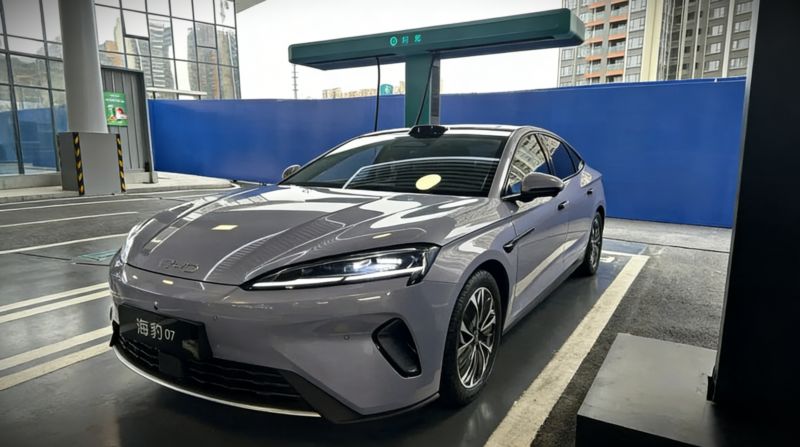
BYD, a titan in the electric vehicle space, is making a bold move to redefine EV charging in China. Fresh off the launch of their second-generation Blade Battery on March 5th, the company has unveiled an ambitious infrastructure strategy dubbed “Flash Charging China.” Li Yunfei, BYD’s General Manager of Branding and Public Relations, announced plans to roll out a staggering 20,000 megawatt-level charging stations by the end of 2026. This initiative signals a significant push towards ultra-fast charging as a primary solution for EV owners.
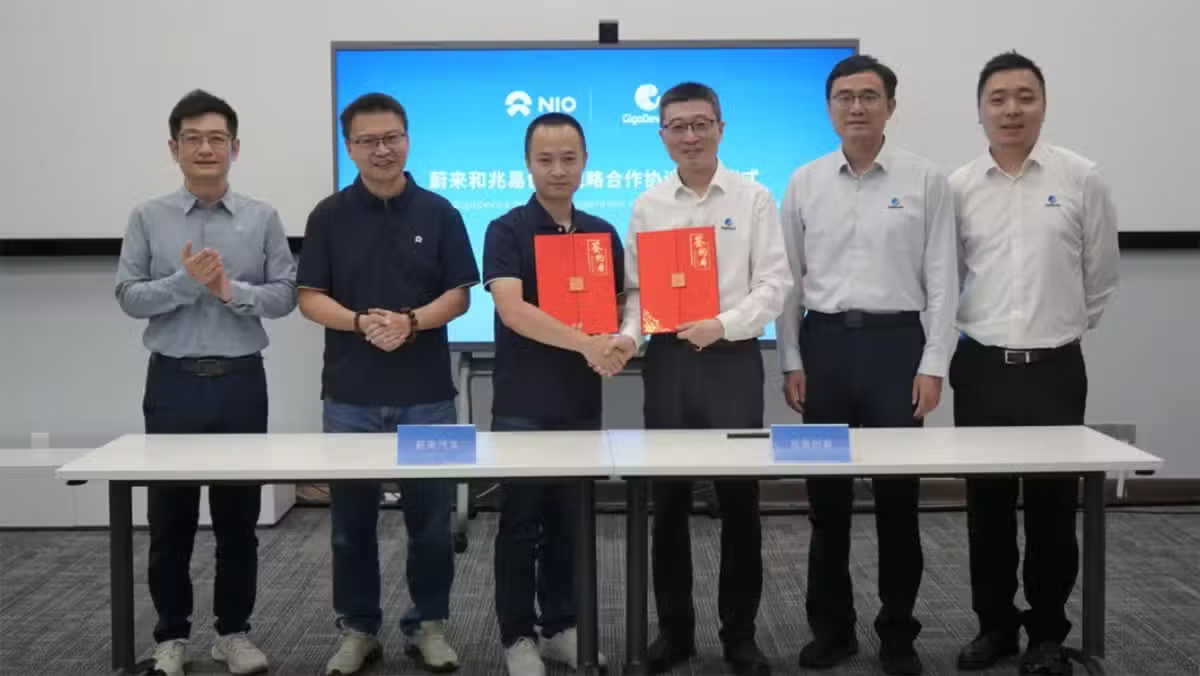
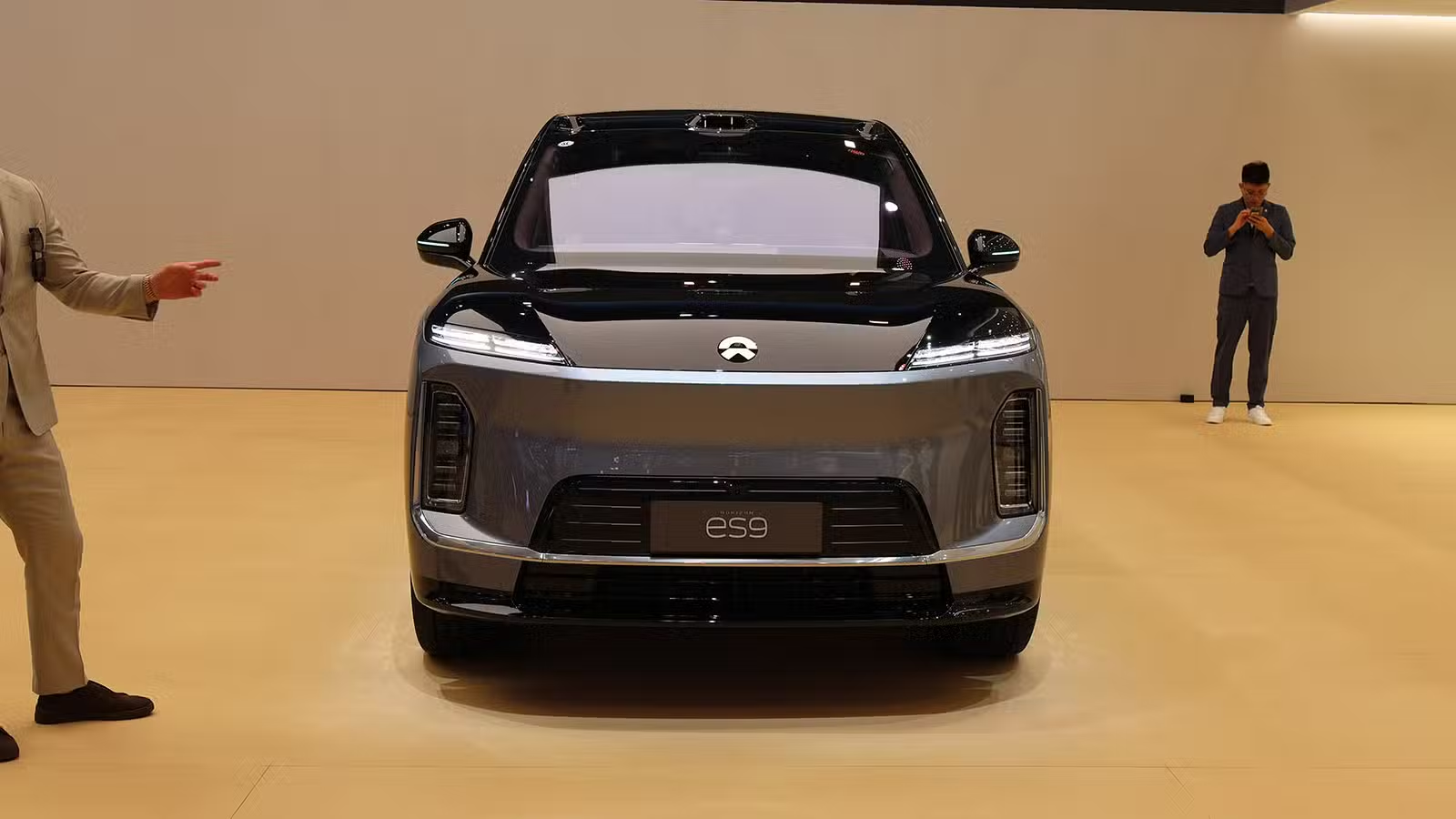
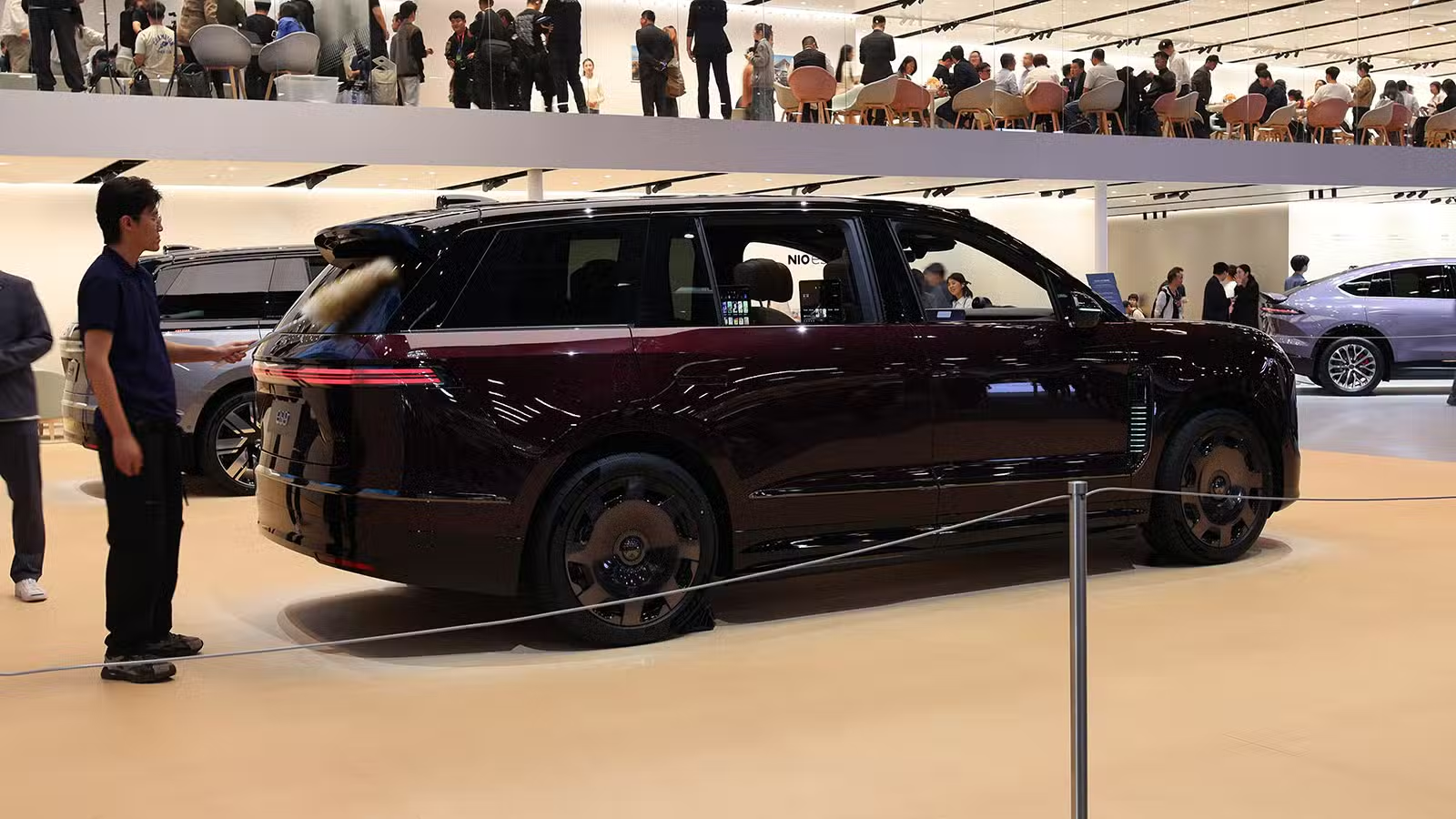
While battery swapping has been a popular alternative, particularly pioneered by Nio, BYD’s strategy suggests a shift in focus. Li Yunfei characterized swapping and flash charging as “different paths to the same destination,” emphasizing their shared goal of accelerating electric vehicle adoption. However, the sheer scale of BYD’s planned charging network indicates a strong belief in the power of rapid replenishment.
The Speed Advantage: Flash Charging vs. Battery Swapping
For years, the allure of battery swapping has been its incredible speed, often taking just three minutes to swap a depleted battery for a fully charged one. BYD’s new Megawatt Flash Charge 2.0 system, coupled with their advanced second-generation Blade Battery, aims to close this gap significantly, making the time difference almost negligible for the average driver. This is a critical development for EV owners who prioritize convenience and minimal downtime.
The economics of battery swapping have proven challenging. Nio, for instance, has invested heavily in its extensive swap station network, but many stations struggle to achieve profitability, requiring a high daily swap volume that isn’t always met. BYD’s approach sidesteps these financial hurdles by focusing on high-power charging infrastructure.
Strategic Partnerships and Cost-Effective Deployment
A key differentiator in BYD’s strategy is its partnership-heavy model, which significantly lowers capital expenditure compared to proprietary networks. Instead of building entirely new sites, BYD is implementing a “station-within-a-station” approach. They are co-locating their cutting-edge charging hardware within existing infrastructure managed by partners like TELD and Star Charge. This clever tactic helps bypass the substantial costs associated with acquiring land and upgrading electrical grids, a major advantage over the more capital-intensive models seen elsewhere.
While Nio’s swap stations boast larger battery storage for grid services, BYD’s units are optimized for high-frequency charging with smaller buffer capacities (200–300 kWh). This design prioritizes quick turnarounds for individual vehicles. A single BYD flash charging unit, drawing around 100 kW from the grid, can support approximately 40 vehicles daily, assuming a typical 60 kWh charge. This efficiency is crucial for managing demand and ensuring widespread availability.
Democratizing Fast Charging: BYD’s Broad Reach
Nio’s swap network has served as a premium service for its dedicated customer base. However, BYD’s flash charging initiative is about making rapid charging accessible to everyone. Following the release of high-profile models like the Yangwang U7 and Denza Z9GT, the new Blade Battery technology is set to trickle down to popular series like the Song and Qin in the second quarter of 2026, with the Dolphin and Seagull following in the latter half of the year. This broad rollout ensures that a vast number of BYD owners will soon benefit from this advanced charging solution.
By the time competitors like CATL scale their battery swapping operations, BYD aims to have its 20,000 charging stations strategically placed to ensure that 90% of urban China is within a 5-kilometer radius of a 1,500 kW plug. This aggressive expansion is set to transform the EV charging landscape in China, making range anxiety a thing of the past for millions of drivers.
Updated: 09/03/2026 11:25 China time
Adrian Leung
Writer
Adrian, an Electrical and Computer Engineering graduate with a love for cars, brings expertise and enthusiasm to every test. He also enjoys audio, photography, and staying active.